
Test and tagging is the routine inspection and electrical testing of plug-in equipment, followed by a tag on the lead that records the result. A competent person checks each item for damage, runs a set of electrical tests, and tags it as safe to use or takes it out of service.
It covers the leads, power boards and portable tools your team plugs in every day. In Queensland, the requirements sit in the Electrical Safety Regulation 2026, and the testing itself follows AS/NZS 3760, the Australian and New Zealand standard for in-service inspection and testing of electrical equipment.
What test and tagging actually involves
The name describes the two halves of the job.
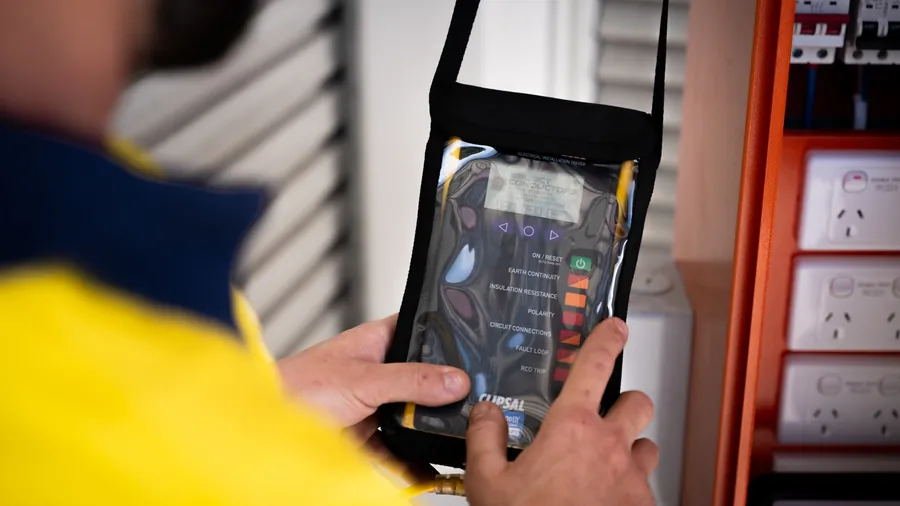
- Test. Each item is inspected for visible damage, then put through electrical tests with a portable appliance tester to confirm the earthing, insulation and wiring are safe.
- Tag. A durable tag goes on the item showing it was tested, when, and by whom. Items that fail get a warning tag instead and are removed from use.
You will also hear it called portable appliance testing, or PAT testing. It is the same process.
A test and tag is a snapshot confirming an item was safe on the day it was tested. A lead can be crushed under a pallet jack the following week, which is why testing runs on a schedule and why staff should still look over equipment before they use it.
What equipment needs test and tagging?
The Queensland Regulation applies testing requirements to what it calls specified electrical equipment. For most workplaces, that means:
- extension leads (cord extension sets) rated at 20A or less
- power boards and other portable outlet devices rated at 20A or less
- equipment rated at 20A or less that connects to a low-voltage supply with a flexible cord and plug
For office work and service work (shops, schools, health facilities, restaurants and the like), the plug-in equipment category only covers items that are moved during normal use. A kettle, a vacuum or a laptop charger falls into it. A fridge that never leaves its spot generally does not.
The type of work matters too. The Regulation sets different requirements for construction, manufacturing, office, service, rural industry and amusement work. Construction work has its own, stricter requirements, with equipment also required to meet AS/NZS 3012, which is why crews on builder and developer sites see testing more often than an office does. Our test and tag frequency guide sets out the intervals for each environment in Queensland.
What happens during a test and tag?
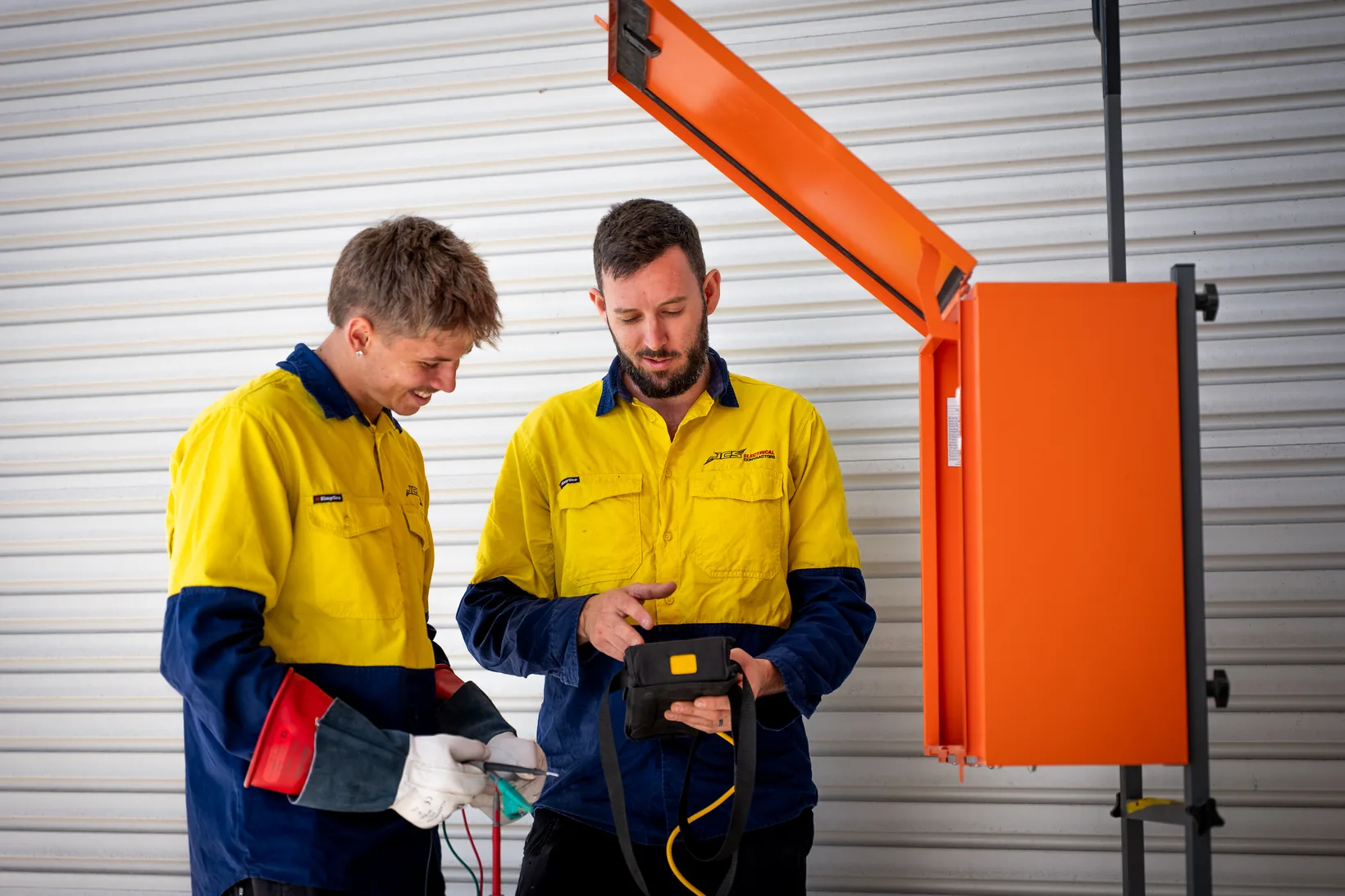
A test and tag visit follows the same order for every item. Here is what each step typically checks.
1. Visual inspection
Before any test, the item is checked by eye and by hand. The tester looks for cut or crushed leads, damaged plugs and bent pins, cracked casings, scorch marks, exposed wiring, and cord grips that have pulled away from the plug or appliance. Damage like this can often be spotted before any test is run, and an item that fails the visual inspection does not go on to electrical testing.
2. Electrical tests
Next, the item is plugged into a portable appliance tester. Which tests apply depends on how the item is built.
| Test | What it checks | Where it applies |
|---|---|---|
| Earth continuity | That the earth path from the plug to the exposed metal parts is intact, so a fault is carried safely away | Earthed (Class I) equipment with metal casings, plus extension leads |
| Insulation resistance | That the insulation between live parts and the outer casing or earth is in good condition | Most equipment, both earthed and double insulated |
| Leakage current | How much current escapes from live parts while the item is running | Used instead of an insulation resistance test where that test is not suitable, such as some electronic equipment |
| Polarity | That the active and neutral conductors are connected the right way round | Extension leads and cord sets |
Double insulated equipment, marked with a square inside a square, has no earth, so it skips the earth continuity test.
3. RCD testing
Safety switches (RCDs) protect people by cutting power when current leaks to earth. The Regulation defines a type 1 safety switch as one with a rated residual current of 10mA or less, and a type 2 as more than 10mA and up to 30mA. Testing confirms each RCD trips when it should and fast enough to protect someone. Portable RCDs are tested along with the equipment, and fixed safety switches on your switchboard are usually checked on the same visit. Our test and tag and RCD testing service covers both in one appointment where practical.
4. Tagging and recording
Every item that passes gets a tag. Every result, pass or fail, goes into an asset register so you can show what was tested, when, and what happened to anything that failed.
What does a test and tag label show in Queensland?
The Regulation sets out the minimum details a tag must state once an item has passed. These are called the prescribed details.
| Detail | What must appear (at least one of) |
|---|---|
| When | The date the item was tested, or the date it is due to be retested |
| Who, where the tester works for a company | The tester's name, the tester's electrical contractor licence number, the company name, or the company's electrical contractor licence number |
| Who, for an individual tester | The tester's name, their electrical contractor licence number, their employer's contractor licence number, or their electrical worker licence number |
The tag has to be durable and attached by the competent person who did the test. A tag cannot be put on equipment that has not been tested by a competent person, apart from new equipment.
Test and tag colours
Many sites use colour-coded tags. The national Code of Practice on managing electrical risks notes a tag may be colour-coded to show the month in which the test was done, which gives a quick visual check across a busy floor. The colour is a convenience. The details written on the tag are what show the item is in date, so check the date rather than the colour.
What happens when equipment fails?
An item that fails is not quietly set aside. Under the Regulation, the competent person must immediately attach a durable tag warning people not to use it, and the item must be withdrawn from use straight away.
From there it is either repaired or replaced. A repair to electrical equipment is electrical work, so it needs a licensed electrician, and the item should be tested again before it goes back into service. Where a fault points to a wider problem, such as a socket outlet that keeps damaging plugs, our fault finding team can trace it back to the source.
Who can do test and tagging?
In Queensland, inspection and testing must be done by a competent person, meaning someone with the training and skill to do it properly. A business that offers test and tagging as a paid service to others needs an electrical contractor licence. The WorkSafe Queensland testing and tagging page has the official position, and our frequency guide explains how it plays out on a typical worksite.
Why test and tagging matters for your business
A worn lead or a failed earth can look perfectly fine until someone touches it. Regular testing finds those items while they are still a line on a report.
It also gives you records. If an inspector or insurer asks how you know your equipment is safe, an up-to-date asset register and in-date tags answer that question. For sites that already run emergency and exit light testing and other scheduled checks, test and tag fits into the same maintenance program rather than running as a separate job.
Test and tagging FAQs
Every business has a duty to make sure its electrical equipment is safe. On top of that, the Electrical Safety Regulation 2026 sets specific inspection, testing and tagging requirements for set equipment in construction, manufacturing, office, service, rural industry and amusement work. Whether a particular item needs testing, and how often, depends on the equipment and the work it is used for.
New equipment generally does not need an electrical test before its first use, but it should still be checked for damage from delivery and added to your asset register so its first test is not missed. The Regulation allows a tag on new equipment without a test.
A business can train and appoint its own competent person to test its own equipment. If you engage someone else to do it, they need to hold an electrical contractor licence.
Test and tag covers portable equipment such as leads, power boards and tools. RCD testing covers the safety switches that protect your circuits. They are separate checks, which is why they are often booked together.
A current tag means the item passed when it was tested. It does not replace a quick look before use. Anything with a damaged lead, plug or casing should be taken out of service until it is retested, whatever the tag says.
Book test and tagging with JCS Electrical
JCS Electrical tests and tags equipment for commercial and industrial sites across the Gold Coast, Brisbane and south-east Queensland. We work through your equipment systematically, test your RCDs on the same visit where practical, and leave you with clear records of every result. Get in touch for a quote tailored to your site and equipment count.