
Emergency and exit lighting requires regular inspection and testing under AS/NZS 2293.2. For most commercial buildings, the core requirement is six-monthly testing, supported by additional inspections and maintenance throughout the system's life. Each test serves a different purpose, from identifying damaged fittings to confirming that emergency lighting will operate during a loss of mains power.
Emergency and exit lighting may not operate during normal day-to-day use, which makes scheduled inspection, discharge testing and maintenance essential. This guide explains the ongoing requirements, responsibilities and records relevant to commercial buildings.
What AS/NZS 2293 covers and which part applies
AS/NZS 2293 is divided into separate parts covering the design, installation, inspection, maintenance and manufacture of emergency lighting systems. Understanding which part applies helps prevent ongoing maintenance requirements from being confused with the original design and installation requirements.
- AS/NZS 2293.1 covers system design and installation. It governs where fittings go, how the escape path is illuminated and what the system has to achieve when it operates. This is the part that matters at fitout and construction stage.
- AS/NZS 2293.2 covers inspection and maintenance of a system already installed. This is the part that sets your ongoing testing obligation.
- AS/NZS 2293.3 deals with the components themselves.
For owners and managers of operating buildings, AS/NZS 2293.2 is the primary reference for the inspection and maintenance of emergency and exit lighting, alongside applicable building and fire-safety requirements. This guide focuses on those ongoing inspection, testing and record keeping obligations.
How often should emergency lighting be tested
Emergency and exit lighting in commercial buildings is generally inspected and tested at six-monthly intervals in accordance with AS/NZS 2293.2. This includes discharge testing to confirm that the fittings continue operating when normal power is unavailable.
Additional visual inspections, maintenance and longer-term component checks may also apply depending on the system, building and current edition of the standard. JCS Electrical can confirm the appropriate testing and maintenance schedule for each site.
The maintenance cycle combines:
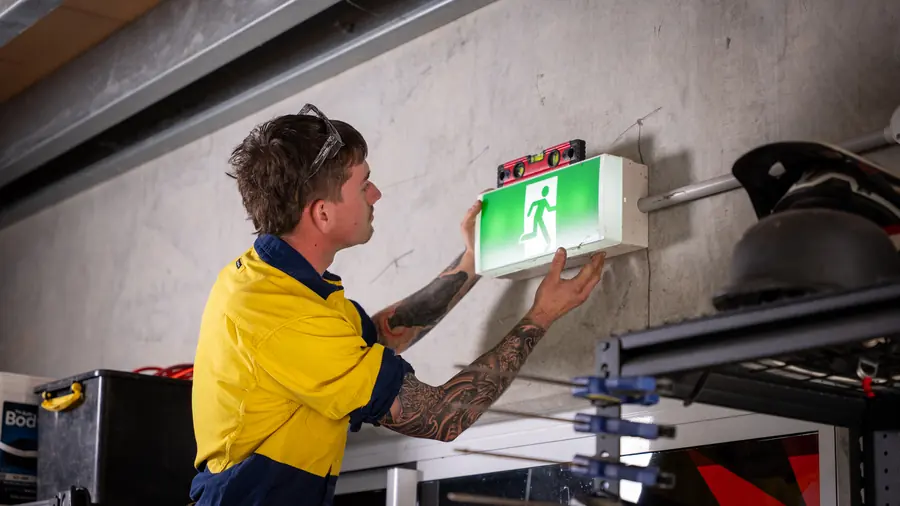
- A routine visual check, often folded into a wider maintenance program, that every fitting and exit sign is present, undamaged, unobstructed and indicating correctly.
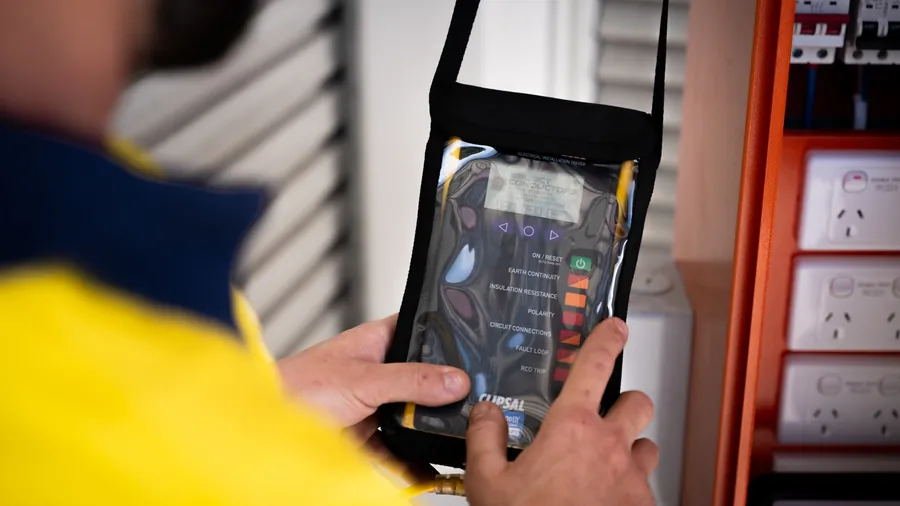
- A discharge test, during which the normal supply to the emergency-lighting system is interrupted and each fitting is checked for the required operating duration on battery supply. This confirms battery performance, which cannot be determined from the charge indicator alone.
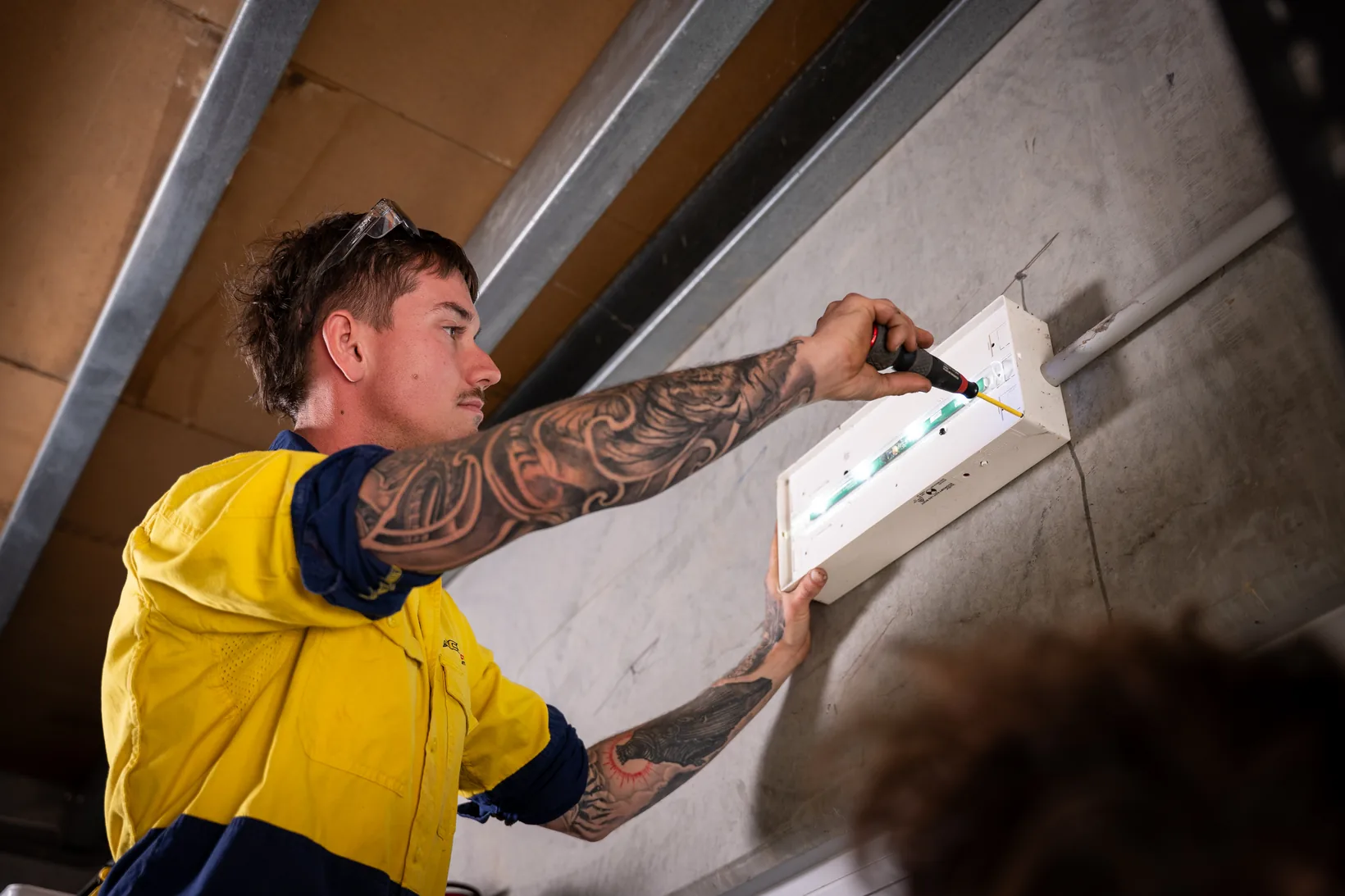
- A more thorough periodic inspection covering mounting, condition, cleanliness of diffusers and whether the building has changed around the system.
- A longer-cycle review of the system as a whole, including battery replacement.
Six-monthly testing is the standard starting point for commercial emergency and exit lighting. However, the complete maintenance schedule should still be confirmed against the current edition of AS/NZS 2293.2, the installed system and the building's specific requirements. JCS Electrical confirms the applicable scope and testing schedule when arranging the work.
Planning the discharge test and recharge period
Following a discharge test, emergency-lighting batteries require time to recharge before they can provide their full rated operating duration again. During this recharge period, the system may not offer the same level of backup operation that it normally provides.
This recharge period should be considered when planning testing for occupied buildings and sites that operate continuously. On larger sites, testing may be staged by area where the system design and site procedures allow, reducing the amount of emergency lighting undergoing recharge at the same time.
Where appropriate, we schedule discharge testing around site occupancy and can stage the work by area to reduce operational risk during the battery recharge period. It is the same principle as planning a switchboard changeover around trading hours: the testing requirement remains the same, but the disruption and site risk can be better managed.
Who can test emergency lighting
Testing has to be done by a competent person, and competence here means demonstrable knowledge of the standard and the system, not simply a trade background.
In practice that matters for three reasons:
- The test goes well beyond switching the power off. It verifies performance against what the system was designed to deliver, and it takes judgement to recognise a fitting that is degrading before it fails outright.
- Any fitting that fails needs rectification, and on most commercial systems that is electrical work.
- The record has to be defensible. A logbook entry signed by someone who cannot explain what was tested is worth very little when an incident is being investigated.
JCS Electrical Contractors holds Queensland electrical contractor licence 85592 and New South Wales licence 474865C, and is Cm3 accredited for contractor safety. We provide emergency and exit-light testing as either a one-off service or part of an ongoing scheduled maintenance program. An ongoing program makes testing dates, records, defects and follow-up work easier to manage over the life of the system.
What a compliant record actually contains
The testing is only half the obligation. The other half is being able to prove it happened.
A record that will stand up covers, for each fitting:
- What was tested and when.
- The inspection and test result, including whether each fitting operated for the required discharge-test duration.
- Any fitting that failed, what was done about it, and when it was retested.
- Who carried out the work.
Keep the records accessible on site. When a building changes hands, changes tenants or is inspected after an incident, the logbook is the evidence, and a gap in it is read as a gap in the maintenance.
What this means for your building
If you cannot say when your emergency lighting was last discharge tested, or you can but cannot produce the record, the system is unverified regardless of how new it is.
If your building has been refitted, repartitioned or had its use change since the system went in, the design may no longer match the escape paths, which is a 2293.1 question rather than a maintenance one. New walls create dark spots that no amount of testing will reveal, because every fitting will pass while the escape route is no longer covered.
We test, maintain and repair emergency and exit lighting on commercial and industrial sites across the Gold Coast, Brisbane, Logan, Yatala and Toowoomba, and we can pick up an existing system mid-cycle.
Request a quote and we will confirm the schedule that applies to your building, in writing, before any work starts.
Common questions
How often should emergency lighting be tested in a commercial building?
Emergency and exit lighting in commercial buildings is generally inspected and tested every six months in accordance with AS/NZS 2293.2. Additional inspections and maintenance may also apply depending on the installed system, building requirements and current edition of the standard.
Who can test emergency lighting?
Emergency and exit lighting should be tested by a competent person with appropriate training and knowledge of the system and AS/NZS 2293.2. Any electrical repairs, alterations or replacements identified during testing must be completed by appropriately licensed electrical personnel. Additional licensing or certification requirements may apply depending on the jurisdiction and scope of work.
What happens if a fitting fails the test?
A failed fitting is recorded as a defect and should be rectified promptly. Once repaired or replaced, the fitting is retested and the result recorded so there is a clear history of the failure and corrective work.
Do we still need testing if the building is new?
Yes. A new system is commissioned, not exempt. Batteries begin ageing from installation, and the maintenance obligation starts once the system is in service.
Does emergency lighting testing interrupt our operations?
The discharge test interrupts supply to the emergency system, not to your building's general power. The planning consideration is the recharge window afterwards, which is why we stage testing by area on occupied sites.