
Test and tag requirements in Queensland depend on the type of electrical equipment, the work being performed and the environment in which the equipment is used. Certain equipment must be inspected, tested and tagged at prescribed intervals, while other equipment is managed according to its use and electrical risk. Applying one blanket rule to every appliance can result in low-risk equipment being over-tested while higher-risk equipment is not tested often enough.
Here is the accurate position, what actually determines how often your equipment needs testing, and who is allowed to do it on a Queensland worksite.
What test and tag laws actually require
Electrical safety in Queensland is governed by the Electrical Safety Act 2002 and the Electrical Safety Regulation 2026. Together, they require businesses to manage electrical risks and ensure, so far as is reasonably practicable, that electrical equipment is safe and does not place people or property at risk.
The general electrical-safety duty is outcome-based, but the Regulation also sets specific inspection, testing and tagging requirements for particular types of equipment and work environments. A compliant approach therefore needs to account for both the prescribed requirements and the actual electrical risks present at the workplace.
That distinction matters for two reasons:
- You cannot discharge the duty by tagging everything once and filing the paperwork. The obligation is ongoing and it is about the equipment actually being safe.
- Requirements should not be determined by the industry name alone. The type of equipment, how it is used, the environment and any applicable regulatory or risk-assessment requirements must all be considered when establishing an inspection and testing program.
Where equipment is used for construction, demolition or similar work, a separate standard applies and the requirements are stricter. That catches out businesses whose crews move between an office and an active construction site. If your business moves between an office and a site, the same appliance can sit under different expectations depending on where it is plugged in.
The question worth asking is not whether the law names you. It is whether you could show an inspector how you know your equipment is safe.
What determines your test and tag frequency
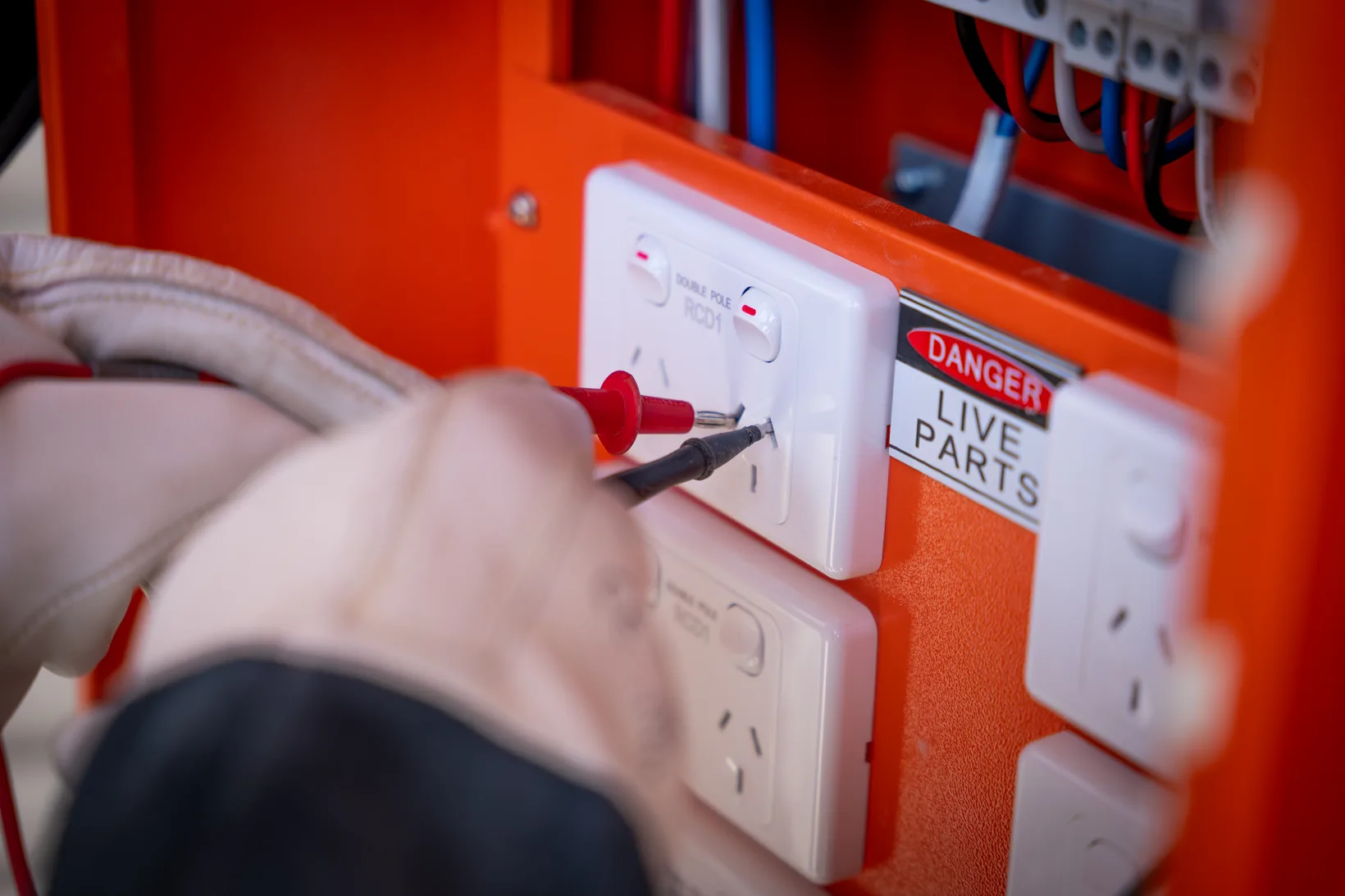
The interval is not a single number that applies to every business. It is determined by the environment the equipment operates in and how hard that environment is on it.
The factors that set it:
- The operating environment. Equipment on a dusty, wet or physically demanding site degrades far faster than the same item on a desk.
- How the equipment is used and moved. A lead dragged across a floor daily and a fixed appliance that never moves carry very different risk.
- Whether the flexible cord is subject to flexing. This is the distinction that separates a workshop tool from a server-room appliance, and it moves the interval significantly.
- The equipment's own history. Anything that has been damaged, repaired or returned from hire is treated differently from equipment in steady service.
- Your site-specific risk assessment. Higher-risk conditions may justify more frequent inspection and testing, but a risk assessment cannot be used to reduce or avoid any minimum frequency specifically required by legislation or an applicable standard.
Testing intervals vary according to the work and equipment involved. As a general guide, Queensland requirements include three-monthly testing for most construction equipment; six or twelve-monthly testing for specified manufacturing equipment depending on its construction; five-yearly testing for applicable office equipment where no safety switch is installed; and twelve-monthly testing for applicable service-work equipment where no safety switch is installed. Different requirements apply to safety switches, hire equipment and other specialised environments. JCS Electrical confirms the correct classification and testing schedule before commencing work.
New equipment, hire equipment and repairs
Three cases catch businesses out, and none of them fits neatly into a frequency schedule.
Brand-new electrical equipment does not generally need to be electrically tested before its first use. It should still be visually inspected for any damage caused during transport, delivery or installation, and entered into the site's asset register or testing program so its first required test is not missed.
Hire equipment is subject to separate inspection and testing requirements. Hire companies must generally ensure equipment is inspected and tested before each hiring and at least every six months, subject to the specific requirements applying to the equipment and any permanently connected safety switch. Equipment that has undergone repairs or servicing affecting its electrical safety should be tested before being returned to service.
Who can carry out test and tag in Queensland
This is the part most guides get wrong, and it works in your favour.
In Queensland, routine inspection and testing of in-service electrical equipment must be carried out by a competent person. Competence means the knowledge and skill to do it properly, gained through training, qualification or experience. A competent person does not need to hold an electrical work licence to perform this specific testing.
There is an important second half to that. A business offering testing and tagging as a service to others is doing electrical work for commercial gain, and that requires an electrical contractor licence.
So the practical position for most sites:
- You may train and appoint an internal competent person to test your own equipment.
- If you engage a contractor to do it, they must be licensed to offer the service.
- Any equipment that fails and needs repair moves into licensed electrical work, whoever found the fault.
JCS Electrical Contractors provides test and tag and RCD testing for commercial and industrial workplaces. Where defects are identified, we clearly record them and can provide approved rectification work where required.
What your records need to show
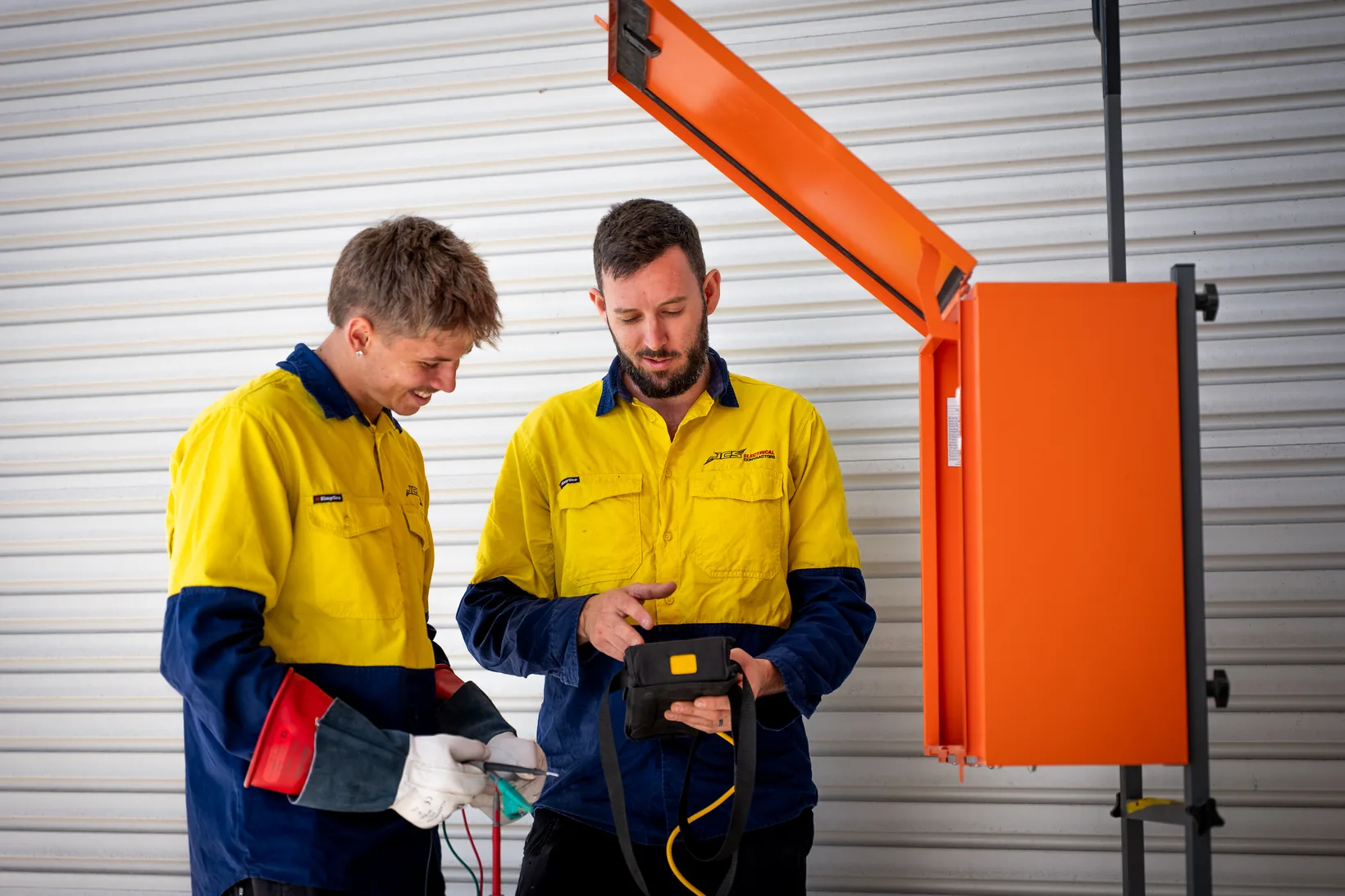
A tag on an appliance is a summary. The record behind it is the evidence.
For each item, a defensible record shows what the equipment is, when it was tested, what tests were performed and their results, who carried them out, and when it is next due. Failures need the same treatment as passes: what failed, what was done, and when it was retested or removed from service.
Keep the register accessible. If an incident is investigated or an audit occurs, records may be requested to verify what was tested, when it was tested and who completed the work. Missing items or gaps in the register can make it difficult to demonstrate that the equipment was inspected and tested as required.
What this means for your site
If your testing schedule applies the same interval to every item regardless of its environment, it should be reviewed against the applicable requirements and the risks present at your site. Equipment used in harsher operating conditions may require more frequent inspection and testing than equipment kept in a low-risk office environment.
And if your equipment moves between an office, a workshop and a live site, the schedule needs to follow the equipment rather than the address.
We handle test and tag, RCD testing and the repairs that come out of them across the Gold Coast, Brisbane, Logan, Yatala and Toowoomba, and we can take over an existing register mid-cycle. Where recurring equipment or RCD failures are identified, further fault finding or rectification may be recommended to determine and address the underlying cause.
Request a quote and we will confirm the schedule that applies to your equipment, in writing, before we start.
Common questions
Is test and tag a legal requirement in Queensland?
Queensland law requires specified electrical equipment and safety switches to be inspected and tested at maximum intervals based on the type of work and operating environment. For other equipment, businesses still have a general duty to ensure it is electrically safe and should maintain an appropriate risk-based inspection and testing program.
How often does equipment need to be tested?
Testing intervals depend on the type of work, the equipment and its operating environment. Common maximum intervals range from three months for much of the equipment used in construction, to six or twelve months in manufacturing, twelve months for certain service and rural equipment, and five years for applicable office equipment not protected by a safety switch. Separate requirements apply to RCDs, hire equipment and specialised environments.
Does the person testing need to be a licensed electrician?
Routine inspection, testing and tagging may be completed by a competent person with the necessary knowledge, skills, training and testing equipment. However, repairing, altering or dismantling electrical equipment is electrical work and must be completed by a person holding the appropriate electrical work licence.
What happens to equipment that fails?
Equipment that fails must be withdrawn from use and clearly identified as unsafe. It should then be repaired by an appropriately licensed person and retested before being returned to service, or replaced or disposed of.
Do we need to test brand new equipment?
Brand-new equipment generally does not require electrical testing before it is first used. It should still be visually inspected for damage, entered into the equipment register and assigned its first testing date based on the type of work and operating environment.