The main benefits of LED lighting for a commercial site are lower power use, far fewer lamp failures, less heat inside the building and light that can be set to suit each space. For property and facility managers, the maintenance saving often matters as much as the power bill.
This guide covers what each benefit looks like on a working site, what to check before a commercial LED lighting upgrade, and how to plan the work so tenants and staff can keep operating.
The benefits of LED lighting at a glance
| Benefit | What it changes on a commercial site |
|---|---|
| Lower energy use | Less power for the same light, across every hour the lights are on |
| Longer life | Fewer failed fittings, fewer call-outs and less work at height |
| Less heat | Less heat added to the building for the air conditioning to remove |
| Better light quality | Light levels, colour and glare matched to the task in each area |
| Easy to control | Works with sensors, timers and daylight controls to cut wasted hours |
Lower energy use and running costs
Lighting runs for long hours on most commercial sites, so efficiency gains add up quickly. The Australian Government's business lighting guide on energy.gov.au states that LEDs use up to 75% less energy than the old halogens.
Most commercial buildings are not lit by halogens alone. Offices and tenancies often run fluorescent tubes, and warehouses may still have older high-intensity high-bay fittings. The saving on your site depends on what is being replaced, how many hours the lights run and what you pay for power.
That is why a commercial upgrade should start with a lighting audit. JCS commercial lighting and LED upgrades begin with an assessment of existing fittings, operating conditions and energy use, so the scope is based on your site rather than a rule of thumb.
Fewer failures and fewer call-outs
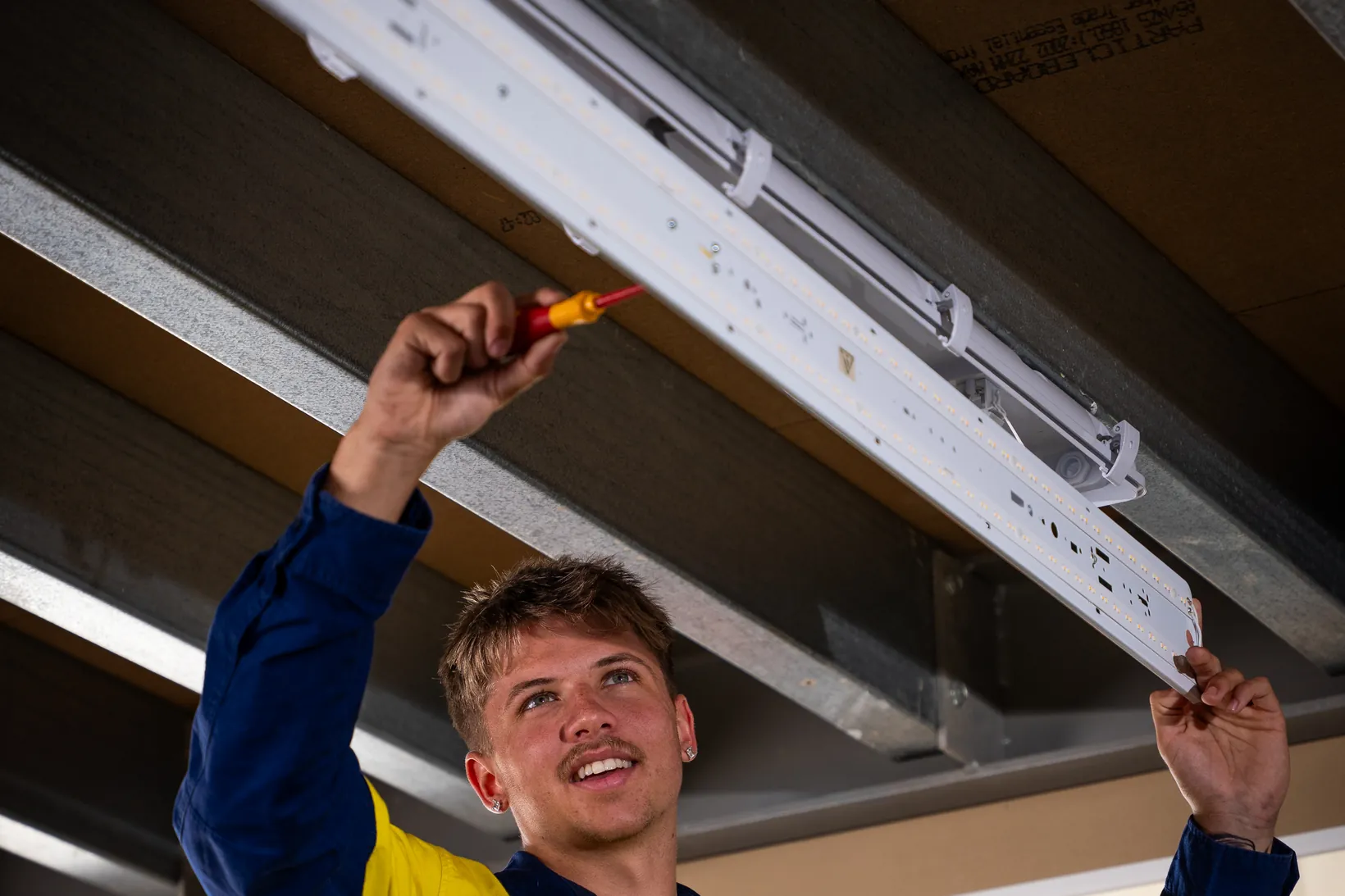
Energy.gov.au also notes that LEDs last up to 25 times as long as halogens, which greatly reduces the need for lamp changes and maintenance. On a commercial site, that often matters more than the price of the lamp.
Older fittings tend to fail one at a time. Each failure means a service call, a ladder or an elevated work platform, and an area that is dim or out of use until it is fixed. In warehouse lighting with high bays, or a foyer with a high ceiling, the cost of access can be more than the cost of the part.
Replacing fittings as a group turns that recurring nuisance into one planned job. For property managers and strata and body corporate committees, it also means fewer lighting defects reported by tenants, fewer after-hours access arrangements and a simpler commercial electrical maintenance schedule.
Less heat for the air conditioning to remove
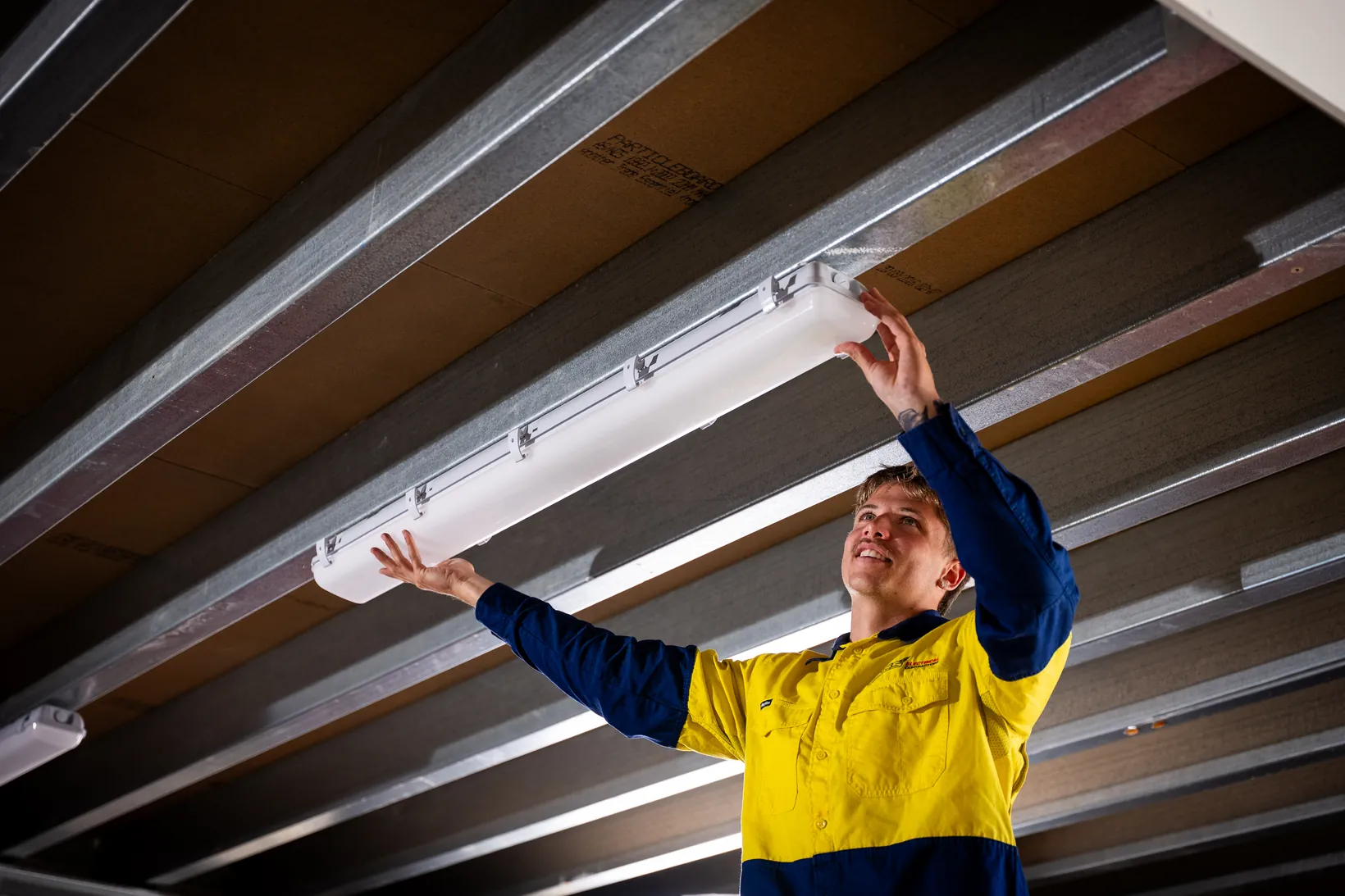
Halogen and other older lamps give off a lot of heat as well as light. Energy.gov.au notes that LEDs generate less heat than halogens, so the load on air conditioning is reduced.
For Gold Coast buildings that run air conditioning through long, warm summers, every fitting that adds less heat takes some pressure off the cooling system. It also makes spaces with low ceilings or dense downlighting, such as retail tenancies and display areas, more comfortable to work in.
Better light for the people using the space
An upgrade is the natural point to fix lighting that has been wrong for years. A warehouse aisle, an office desk and a retail display all need different light, and Australian Standards set recommended lighting levels for different workplace tasks.
Light levels and coverage
Older layouts often leave dark spots between high bays, uneven office lighting or storage areas that were never lit properly. A new layout can correct coverage across the whole space instead of matching the old fitting positions.
Colour temperature and colour rendering
LEDs come in a range of colour temperatures, from warm to cool white. Colour rendering (often shown as CRI) describes how accurately colours look under the light, which matters in retail and shopping centre displays and in medical and healthcare settings.
Glare and flicker
Poorly chosen fittings can cause glare on screens and shiny surfaces, and low-quality products can flicker. Energy.gov.au notes that the quality of LEDs can vary and recommends reputable name-brand products. Good office lighting design and fitting selection avoid both problems.
Lighting controls and sensors
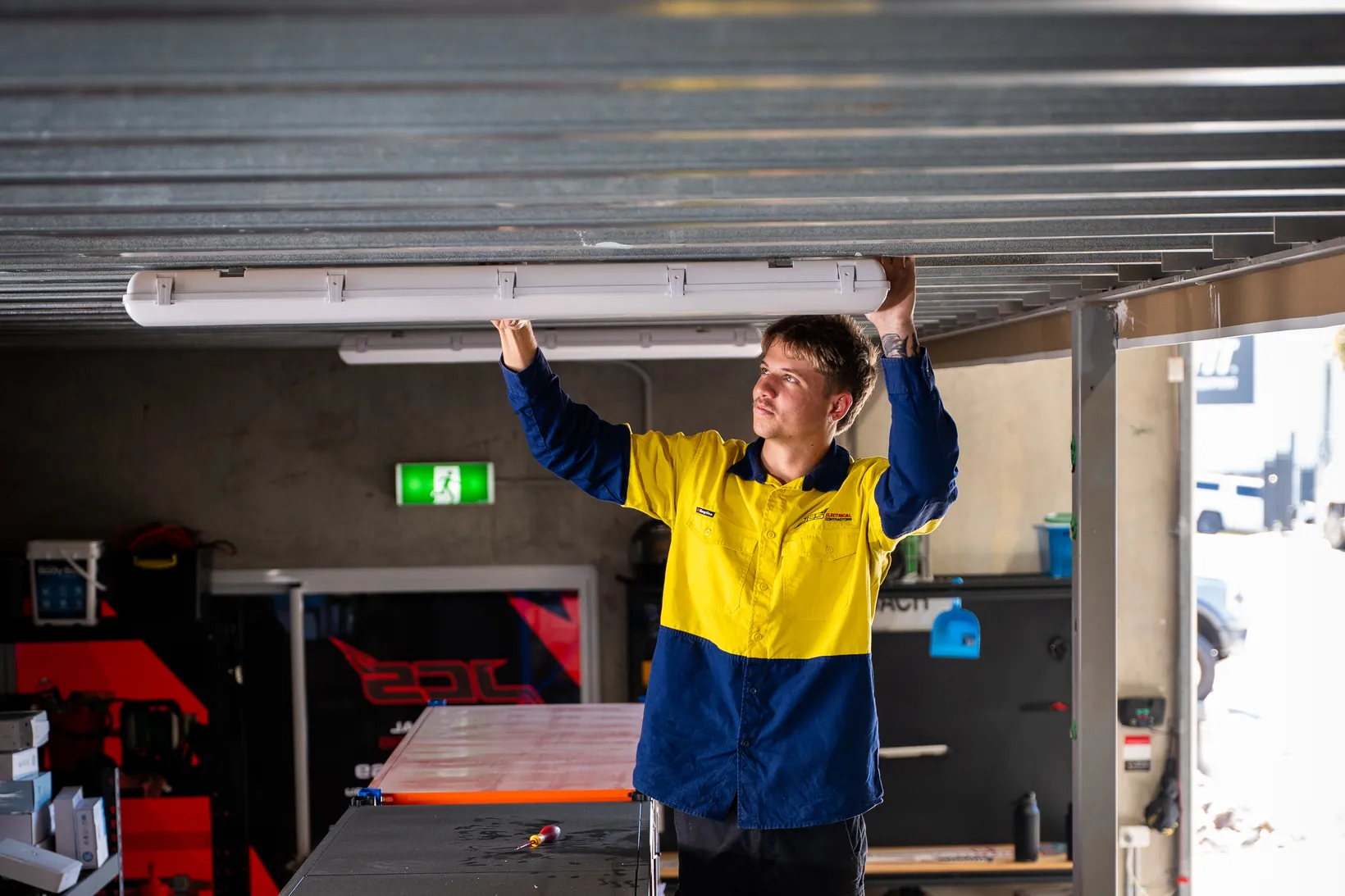
LEDs reach full brightness as soon as they are switched on, which makes them well suited to sensors and timers. Controls cut the hours lights spend on in empty spaces.
- Occupancy sensors. Lights switch off when an area is empty. Energy.gov.au lists meeting rooms, storage and print rooms, and bathroom facilities as ideal areas.
- Daylight controls. Photosensors adjust light output near windows and skylights based on how much natural light is available.
- Timers. External, carpark and signage lighting runs to a set schedule instead of relying on someone to switch it.
- Dimming. Light levels can be lowered in areas that do not need full output all day.
Controls need to be compatible with the new fittings and drivers, so they are best planned as part of the upgrade rather than added later.
The halogen phase-out and older fittings
The Australian Government's Energy Rating program states that mains voltage halogen and tungsten lamps are phasing out in Australia over five years from October 2025. Low voltage lamps such as G4 and MR16 downlights are not part of the phase-out.
If your building still runs mains voltage halogen downlights or display lighting, it makes sense to plan the change rather than replace failed lamps one at a time. A licensed electrician can confirm which fittings on your site are affected.
What to check before a commercial LED lighting upgrade
Best practice on a commercial site comes down to planning. These are the points worth working through before you compare quotes.
- Start with an audit. Count fittings by type, note wattage and operating hours, and record failed or under-lit areas. This is the basis for any payback estimate.
- Work out payback on your own numbers. Compare current energy and maintenance costs with the cost of the upgrade, using your tariff and your hours. Be wary of savings figures that are not based on your site.
- Choose quality fittings. Weigh warranty terms and driver quality alongside the purchase price.
- Decide between retrofit and replacement. Some fittings can take LED lamps as an LED retrofit. Others are better replaced as complete LED fittings. This depends on the fitting's condition and wiring, and needs to be assessed by a licensed electrician.
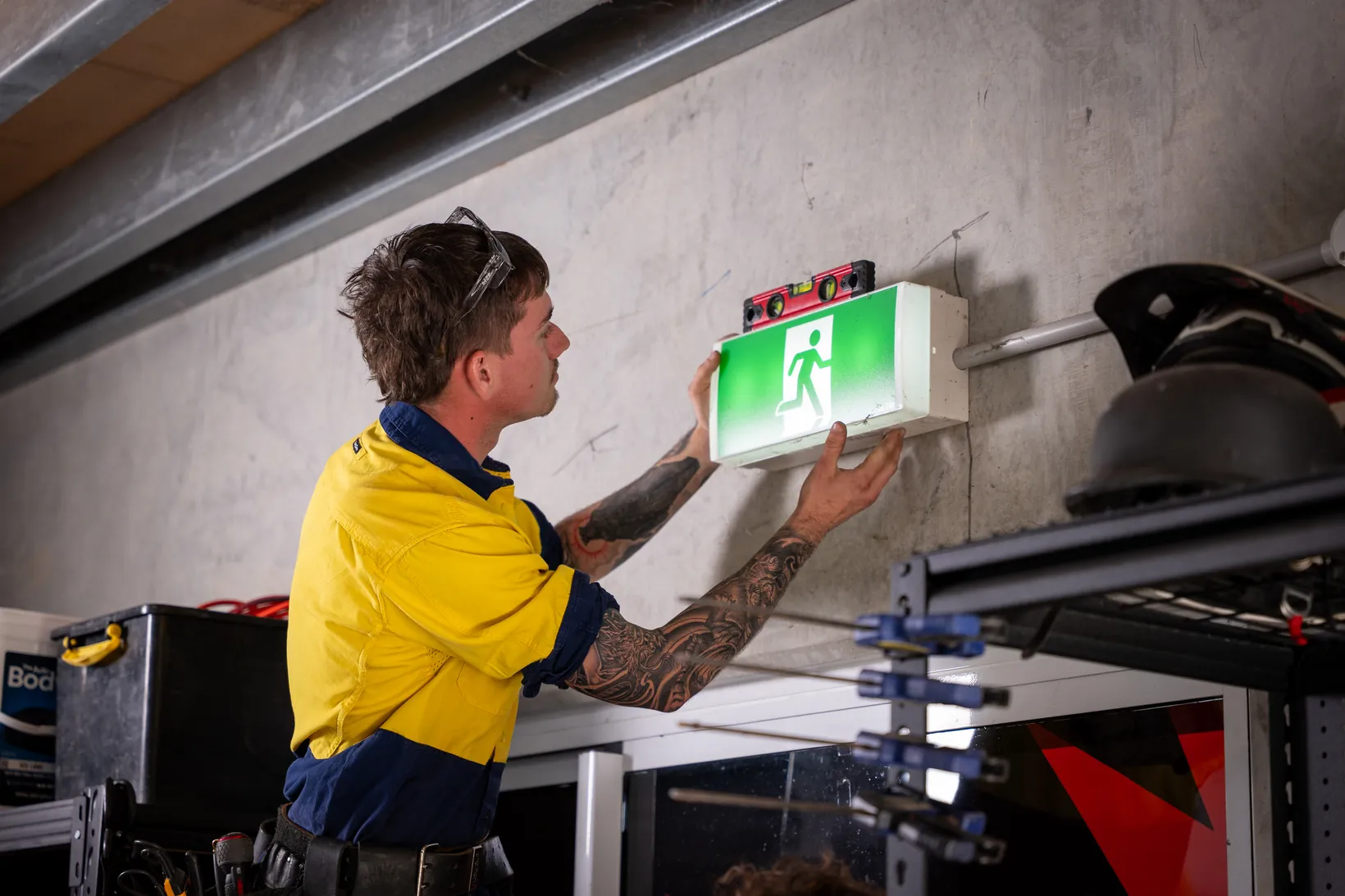
- Include emergency and exit lighting. If emergency fittings are changed, they must stay compliant and be tested once the work is done. Our guide to emergency lighting testing under AS 2293 covers what the ongoing requirements look like.
- Plan around tenants and trading hours. Stage the work by floor, zone or tenancy, or schedule it after hours, so the site keeps running.
- Sort approvals early. In strata buildings and multi-tenant sites, confirm who owns the fittings, who approves the work and who pays before quotes are compared.
- Arrange disposal. Fluorescent tubes contain a small amount of mercury, so removed lamps should be recycled rather than sent to general waste.
How a commercial LED upgrade usually runs
- Lighting audit. Assessment of existing lighting, operating conditions and energy use to identify failed, inefficient or unsuitable fittings.
- Design and fitting selection. A layout and fittings chosen to suit the building, the work done in each area and the required light levels.
- Scope and quote. A clear scope covering fittings, controls, emergency lighting and staging.
- Scheduled installation. Work timed to minimise disruption, with old fittings removed and the site left clean.
- Testing and disposal. Final testing of the completed installation, and recycling or responsible disposal of removed lamps and fittings. Emergency and exit light testing can be booked at the same time.
Frequently asked questions about LED lighting for businesses
It depends on product quality, operating hours and conditions such as heat. Government guidance puts LEDs at up to 25 times the life of halogens. Check the manufacturer's rated life and the warranty for the specific fittings being quoted.
Sometimes. Whether an existing fitting can safely take LED tubes depends on its type, condition and wiring. In many cases replacing the whole fitting gives a better and longer-lasting result. A licensed electrician should assess this, as it involves electrical work.
Often, particularly where lights run for long hours, fittings are hard to reach or lamps are failing regularly. An audit of your site will show whether the numbers stack up.
It should not need to. Work can be staged by area or scheduled outside trading hours, and planning this before the job starts is part of a good scope.
Good quality LEDs with suitable drivers should not visibly flicker. Flicker usually points to a low-quality product or a dimmer that is not compatible with the fitting, which needs to be checked by an electrician.
Planning a commercial LED lighting upgrade on the Gold Coast?
We are licensed in Queensland and New South Wales, and we handle lighting audits, LED upgrades, controls and emergency lighting for commercial sites across the Gold Coast and south-east Queensland.
Contact JCS Electrical to arrange an assessment of your site's lighting.