
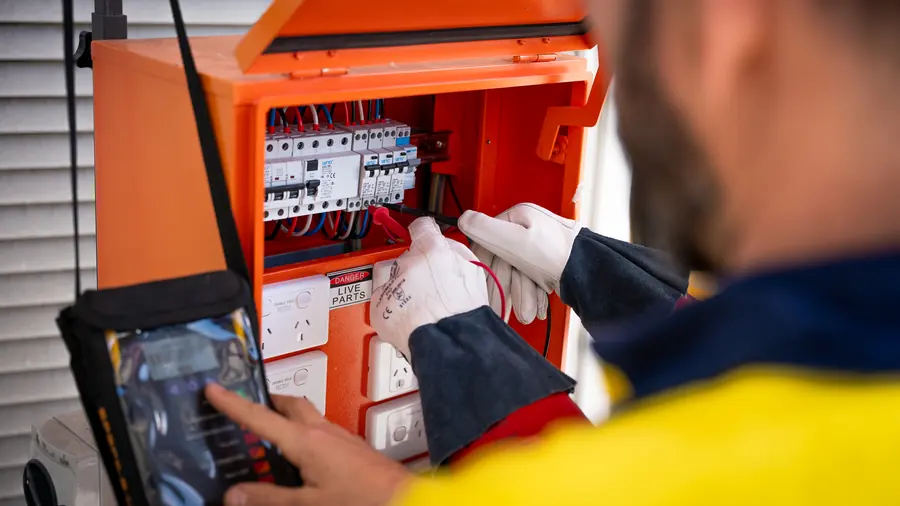

Whether a commercial switchboard requires repair or replacement depends on its condition, capacity, protective devices, documentation and the future requirements of the site.
Switchboards are often upgraded before a complete failure occurs because changes in site load, tenancy requirements, equipment condition or compliance obligations can move beyond what the existing board can safely support.
A tenancy takes on more load. A fitout adds three-phase equipment. An inspection identifies overheating at a busbar joint. These issues do not all carry the same urgency: confirmed overheating, burning or arcing requires prompt assessment and may require isolation, while future capacity requirements can generally be addressed through planned works. Early investigation allows the appropriate response to be arranged before a failure occurs.
This guide covers the signs worth acting on, what compliance means for a commercial site, and what an upgrade does to a building that has to keep operating while the work happens.
Why switchboards get flagged
Switchboard issues are often identified through a combination of operational problems, physical condition, testing results and changes to the site's electrical requirements.
The signs we see most often on commercial and industrial sites:
- Breakers tripping during normal operation. Repeated tripping may indicate overloading, a circuit or equipment fault, earth leakage or a problem with the protective device. It should be investigated rather than repeatedly reset.
- Heat, discolouration, smoke or a burning smell at the switchboard. Keep people clear, do not open or touch the enclosure, and arrange an urgent assessment by a licensed electrical contractor. If there is smoke, fire or an immediate danger, contact emergency services.
- Audible buzzing or arcing from inside the enclosure.
- No spare ways or usable capacity. A full switchboard can restrict future works, but the available supply, maximum demand, physical space and protection requirements should all be assessed before deciding whether an upgrade is necessary.
- Rewireable fuses or obsolete protection devices still in service, with no replacement parts available.
- A circuit directory that no longer matches the building. Undocumented modifications are their own hazard, because the next person working on that board is trusting a label that is wrong.
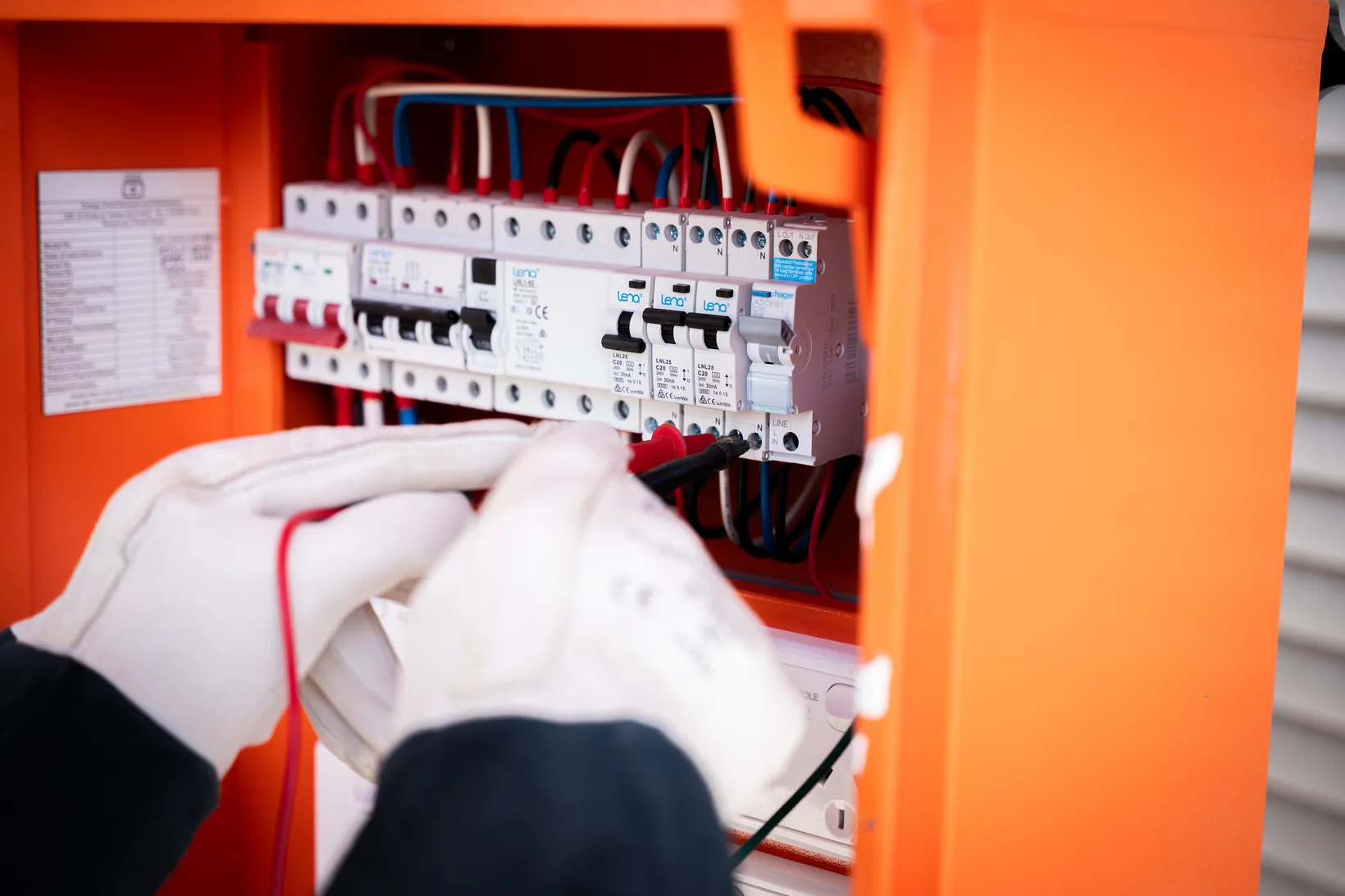
- Thermal imaging showing hot spots at terminations or busbar joints.
- Asbestos backing panels, which appear in older installations and change how the work has to be handled.
Any one of these signs justifies an inspection. Where several are present, repairs or an upgrade may be required, but that decision should be based on the switchboard's condition, capacity, protection and the site's future requirements.
Switchboard upgrades are commonly prompted by tenancy changes, new equipment, increased electrical demand or updated site requirements. Reviewing the switchboard's condition and capacity early allows any necessary work to be properly planned around the site's operations.
What compliance actually means here
Compliance on a commercial switchboard is not a single certificate. It is several obligations that meet at the same enclosure.
New and modified installations are wired to AS/NZS 3000, the Wiring Rules. Switchboard assemblies must be designed and verified in accordance with the applicable requirements of the AS/NZS 61439 series. Commercial site owners and operators must also ensure that the electrical installation remains safe and suitable for its ongoing use.
Three things matter more than the paperwork:
- Protection that is correctly selected and coordinated. Protective devices must have suitable ratings and operating characteristics for the installation. Where service continuity matters, coordination and selectivity should be assessed so downstream faults are isolated as locally as practicable.
- Residual current protection where required. Correctly selected, installed and maintained RCDs provide an important additional layer of protection against electric shock, but they do not replace the need for other electrical safety controls.
- Documentation that can be produced when required. Depending on the work, this may include test results, an accurate circuit directory, a certificate of testing and compliance, and relevant switchboard design or verification records. Keeping these documents accessible assists with maintenance, audits, insurance enquiries and future alterations.
If required documentation cannot be located, the switchboard should be inspected and the available records reviewed. Missing documentation does not automatically mean the board requires replacement, but circuit tracing, testing, updated labelling or further assessment may be needed before future alterations are completed.
What an upgrade actually involves
A switchboard upgrade on an operating commercial site requires careful planning, design, prefabrication, a controlled outage, changeover, testing and final documentation.
The sequence we work to:
- Inspect the existing installation and assess its present load, maximum demand and foreseeable future requirements so the new switchboard is appropriately sized.
- Confirm supply capacity with the network operator where the load is increasing.
- Design the board and protection scheme, then order the assembly.
- Prepare the site, including any temporary supply or staged changeover.
- Change over, test, and issue the certificate and documentation.
The design stage should consider the site's current maximum demand, anticipated future loads, required spare capacity, available space and planned changes. Appropriate allowance for future requirements can reduce the need for premature modifications without unnecessarily oversizing the switchboard.
Planning around your trading hours
Outage planning is a critical part of a switchboard upgrade because it determines how the work will affect trading hours, tenants, essential services and normal site operations.
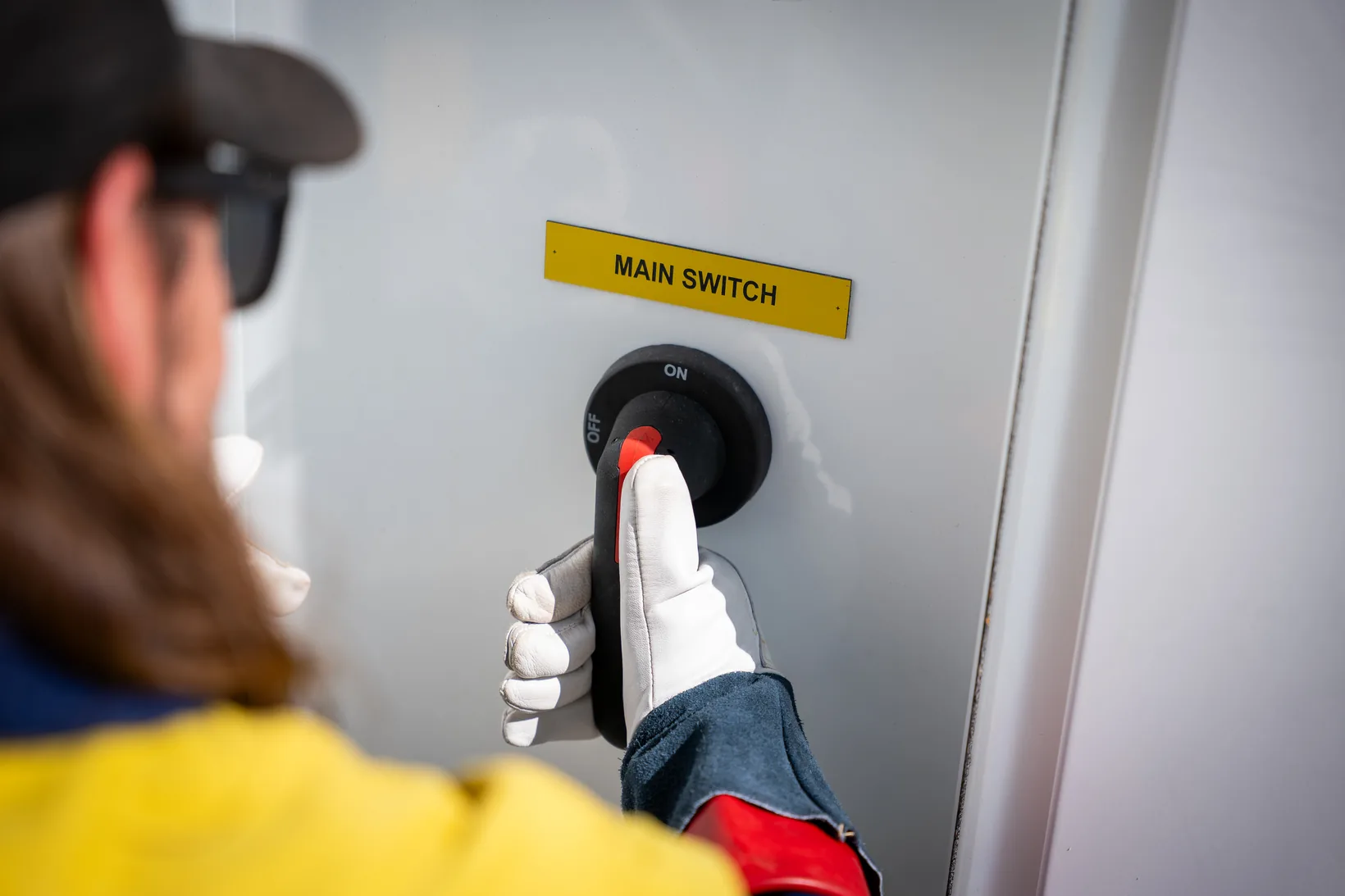
Every changeover requires a planned isolation of the affected supply. The duration depends on the switchboard, supply arrangement and how much work can be prefabricated before the shutdown. Where continuity is critical, after-hours work, staged changeovers or a suitably designed temporary supply may be considered based on the site's requirements.
Critical services and operating constraints should be identified during the quoting and planning stages. Refrigeration, servers, security systems, lifts and essential processes may affect the timing, staging, temporary supply requirements and overall scope of the work.
For sites where the upgrade is being driven by a fitout or a new tenancy, it is worth sequencing the board with the fitout programme so the building is only shut down once.
What it means for your site
If your switchboard is repeatedly tripping, overheating, lacking usable capacity or missing essential documentation, arrange a detailed assessment. The findings will determine whether repair, maintenance, updated documentation or a complete upgrade is the appropriate response.
Even where no immediate concerns are present, the switchboard should remain part of the site's preventative maintenance program. Thermal imaging can help identify abnormal heat patterns associated with issues such as loose connections, overloaded circuits or unbalanced loads, particularly when the equipment is operating under sufficient load. Any findings should be assessed alongside appropriate inspection and electrical testing.
We handle commercial switchboard upgrades across the Gold Coast, Brisbane, Logan, Yatala and Toowoomba, on sites that have to keep trading while the work happens.
Request a quote and we will inspect the board, tell you plainly whether it needs replacing, and scope the outage around your operation.
Common questions
Do I need a switchboard upgrade, or just a repair?
A repair addresses a specific fault. An upgrade may be appropriate when the switchboard's condition, protection, capacity or future requirements cannot be effectively addressed through targeted repairs. Repeated faults justify a broader assessment, but do not automatically mean the entire switchboard requires replacement.
Does the whole site need to shut down?
Not necessarily. The required isolation depends on the switchboard, supply arrangement and scope of work. Some upgrades can be completed in stages or supported by a suitably designed temporary supply, but affected circuits will still require planned outages. The proposed method and outage duration should be confirmed after assessing the site.
Will I get documentation when the work is finished?
Yes. Documentation appropriate to the completed work will be provided and will include a certificate of testing and compliance, test results, an updated circuit directory and relevant switchboard records. These documents should be retained with the site's electrical and maintenance records.
Our board is old but nothing has gone wrong. Do we still need to act?
Age alone does not determine whether a switchboard requires replacement. Its condition, capacity, fault rating, protective devices, component availability, documentation and the site's future requirements should all be assessed. An older board may remain serviceable if it is safe and suitable, while deterioration, obsolete components, asbestos-containing materials or insufficient capacity may justify a planned upgrade.